

We have been talking about intelligent artificial systems (AIs/algorithms) since the 1940s, but today the subject is on everyone’s lips, and rightly so. My advice to all white-collar workers who think they’re immune to disruption is to read Matt Shumer’s next post, especially if they spend most of their time on a computer doing analysis, reporting, communications, or intervening in business processes.
AI is not a passing buzz: its progress follows exponential laws, and the major economic players are betting massively on it. The changes in the professional world, already at work, will accelerate: the text announces “disorienting” years for all cognitive professions (lawyers, analysts, developers, teachers, etc.), and insists on the need to take a close interest in them now, with curiosity but also with urgency.
The post gives some recommendations for professionals: start using AI seriously, not just as a search engine. Subscribe to a paid version of a generative language model (GPT) — in the order of €20 per month. Act accordingly, because these three years could well be decisive for your career. Don’t let your ego get the better of you: explore automatic solutions that do better than you. Develop your ability to change and remain financially flexible. Get into the habit of adapting. This is perhaps the most important thing. Get your personal finances in order so you don’t get stuck in high fixed expenses. Review what you advise your children. Think about your situation and focus on what is most difficult to replace. Relationships and trust built over the years: work that requires physical presence; positions involving responsibility (those where someone still has to agree, take legal responsibility, go to court, etc.) Your dreams are suddenly much more within reach. If you’ve always wanted to create something but didn’t have the technical skills or money to hire someone, that hurdle is largely gone.
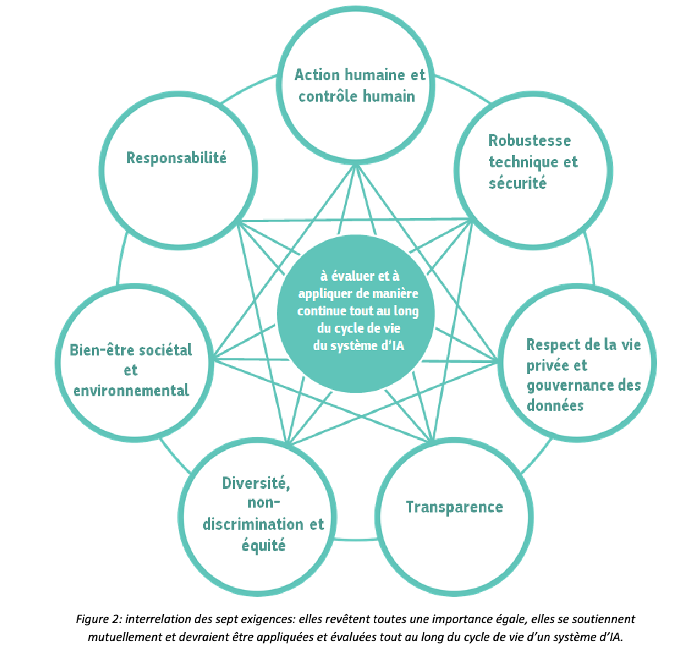
I would add to this very individualistic advice from an American entrepreneur, which ultimately contributes to making AI something that is endured and not democratically chosen, to take an interest in it in order to collectively implement the necessary safeguards and to develop ethical, inclusive and collectively useful uses by integrating environmental aspects. Moreover, biases and hallucinations of models as well as untimely updates caused by AI agents abound..
The challenge is that in a galloping innovation where a few multinationals lead the way for their interests of power or money, good reasoned use rarely imposes itself spontaneously, at least initially, and then it is often too late for phuysic or legal people who are not consenting victims. There is a balance to be found between precaution and innovation.
“Every technology has a positive side and a negative side, and the same will be true for AI.”
Esther Lynch, General Secretary of the European Trade Union Confederation
Some legal tools in France : CNIL – Data Protection Act since 1978; the GDPR from 2018 – and in particular Article 22; the Charter of Fundamental Rights of the EU – 2000; the Labour Code – in particular concerning discrimination in the employment relationship (including recruitment); the European Regulation on artificial intelligence AI.
Some works in the humanities to consult

Hartmut Rosa
Alienation and Acceleration
Towards a Critical Theory of Late Modernity
Pierre-Yves Gomez
The mischievous spirit of capitalism
Gaspard Koenig
The End of the Individual
A philosopher’s journey to the land of artificial intelligence